

I have walked into a lot of dental offices over the years. And within about thirty seconds of stepping through the door, I could usually tell what kind of workplace it was.
Not from anything dramatic. From the small things. The way the administrator greeted me. Whether the team spoke to each other with ease or tension. Whether the front desk felt like the calm centre of a functioning practice or like a pressure point that everyone was managing around. The energy in those first moments told me more about that office’s culture than any conversation that followed.
Workplace culture in a dental office is not an abstract concept. It is something you feel the moment you arrive – and something that the people working there feel every single day.
The front desk sets the tone
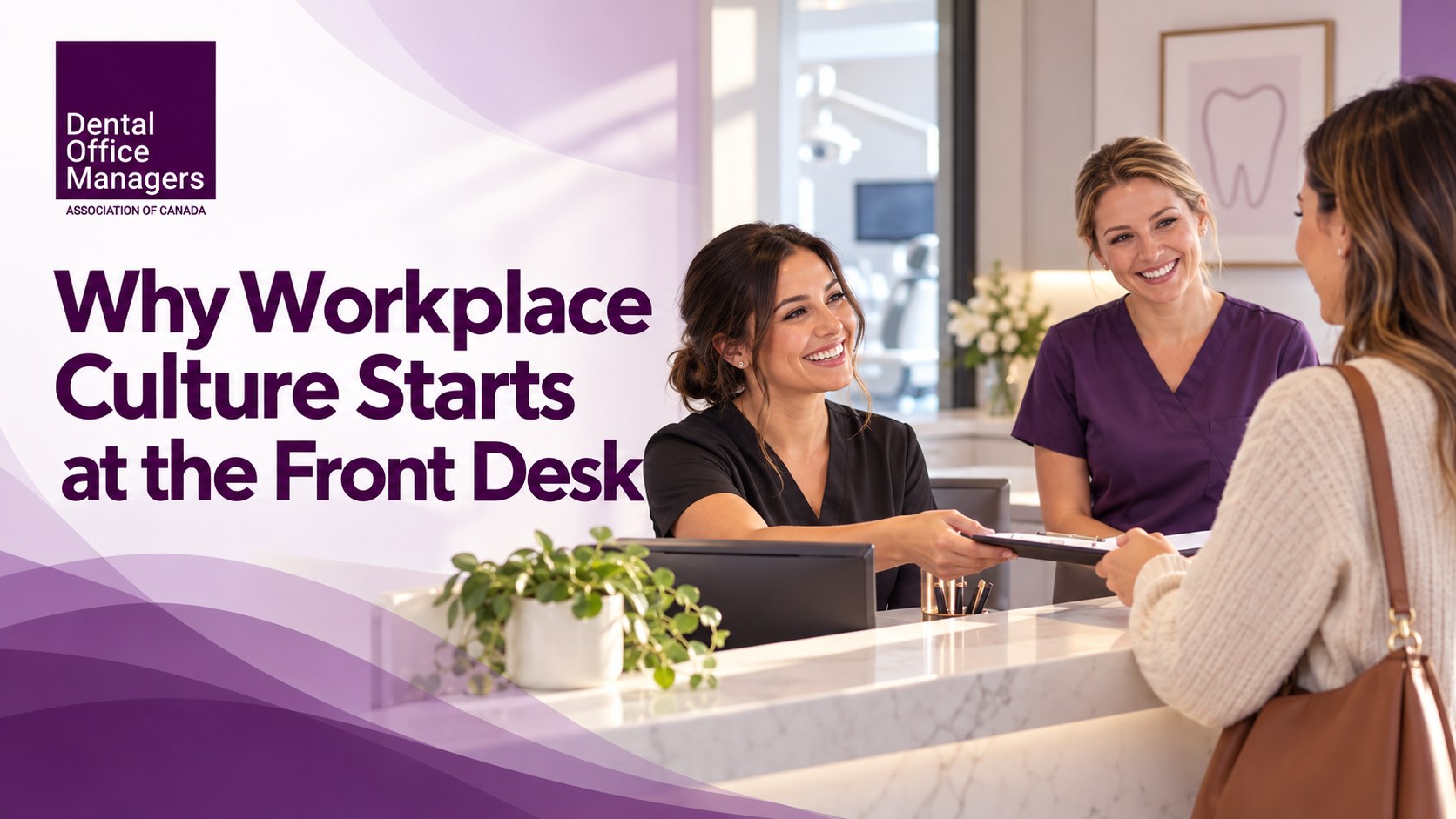
The administrator or manager at the front desk occupies a unique position in the culture of a dental practice. They are the first point of contact for patients and often the first point of resolution for problems. They interact with everyone – the clinical team, the management, the patients, the insurance companies, the dental reps – and they do so more consistently than almost anyone else in the building.
That means they have an outsized influence on the emotional temperature of the practice. When the front desk is calm, informed, and engaged, it has a stabilizing effect on everyone around it. When it is stressed, undertrained, or unsupported, that ripples outward too.
This is not a burden to place on administrators. It is an argument for investing in them. When dental practices invest in the professional development, tools, and support that front desk professionals need, the return shows up in the culture of the whole practice.
When the culture breaks down
Most dental office administrators have experienced a workplace where the culture was not healthy. The dynamics between the front and clinical teams were adversarial rather than collaborative. Communication broke down in ways that affected patient care. Conflict between personalities was left unaddressed until it became unmanageable.
These situations are more common than most practices would like to admit. And they take a real toll – on the people working in them, on patient experience, and on the practice’s ability to function at its best.
One of the things I hear most consistently from dental office professionals is how much they wish they had better tools for navigating these situations. Not just the interpersonal conflict itself, but the systemic issues underneath it – unclear roles, unaddressed performance concerns, cultural norms that developed over time and are now difficult to shift.
This is part of why the CPDOM designation matters. Managing a dental office well is not just about keeping the schedule full and the billing accurate. It is about understanding team dynamics, building communication practices that work, and creating the conditions for a workplace where people actually want to show up.
What a healthy dental office workplace looks like
A healthy dental office workplace is not one where there is no conflict or no stress – those are unrealistic expectations in any environment where the pace is fast and the stakes are high. It is one where the front and clinical teams have mutual respect and clear communication. Where concerns are raised and addressed before they become crises. Where the administrative team feels valued – not just in words, but in the way decisions are made and support is provided.
DOMAC’s link to the Healthy Workplace Matters resource exists because we know this is an area where dental office professionals need more support, not less. If you have not explored it, I would encourage you to.
And if you are a dental office manager who is navigating workplace culture challenges – the CPDOM is designed for exactly the kind of leadership this work requires. Visit officemanagers.ca to learn more.
– Executive Director, Dental Office Managers Association of Canada